

I feel that this post is long overdue for someone who loves the food involved with backpacking as much as I do.
In my many miles of hiking and backpacking, I have come to know some of the tricks of the trade when it comes to backcountry meals. In this post I will talk about my favorite meals and snacks for on trail, as well as some advice when meal planning for outdoor adventures.
Dinner time meals
1. Knorr’s Pasta Sides
Knorr’s are my all-time favorite backpacking meal. There are so many flavor options and package sizes. You can purchase a “family size” package which I highly recommend for those especially taxing days on trail. My favorites are the chicken and broccoli flavored rice/pasta, and the creamy garlic pasta. The packages are filling but normally contain quite a bit of sodium. This sodium can be nice for really sweaty days. Sometimes I add chicken to the pasta to add a bit more protein. I found that Knorrs were available at most resupply stops near more populated areas.
2. Near East Toasted Pine Nut Couscous
The Near East Toasted Pine Nut Couscous was a dinner I ate probably 40% of the nights I spent on the Pacific Crest Trail. It was so easy to make, had lots of flavor, and had about 3 servings in one container. All I had to do was boil some water throw the couscous in and then wait a couple minutes. What I love the most about this is that it is easy to customize the flavor and add things in. You could add fresh veggies if you packed them out, dehydrated veggies, and sauces. This can be a relatively cheap meal, a couple dollars per box.
3. Idahoan Instant Mashed Potatoes
These Mashed Potato packets are something I wish I had tried sooner on the trail. I am not someone who regularly eats mashed potatoes so I assumed I wouldn’t enjoy them much on trail. I was so wrong! Like couscous you can add things to the potatoes to add some nutrition and flavor relatively easy. When you are hiking 20+ miles a day you are HUNGRY! And it just feels like your mouth is some sort of conveyor belt that is never satisfied. These potato packets can satisfy that, they make a large helping. Each 8oz packet has about 8 servings. They come in a variety of flavors and for the most part are found at most resupply stops. Some of my trail friends would make potatoes with a package of stuffing and pack along some craisens for a makeshift thanksgiving dinner. Another big plus is that you can make the potatoes in the bag and not have to dirty a pot.
4. Boxed Mac and Cheese
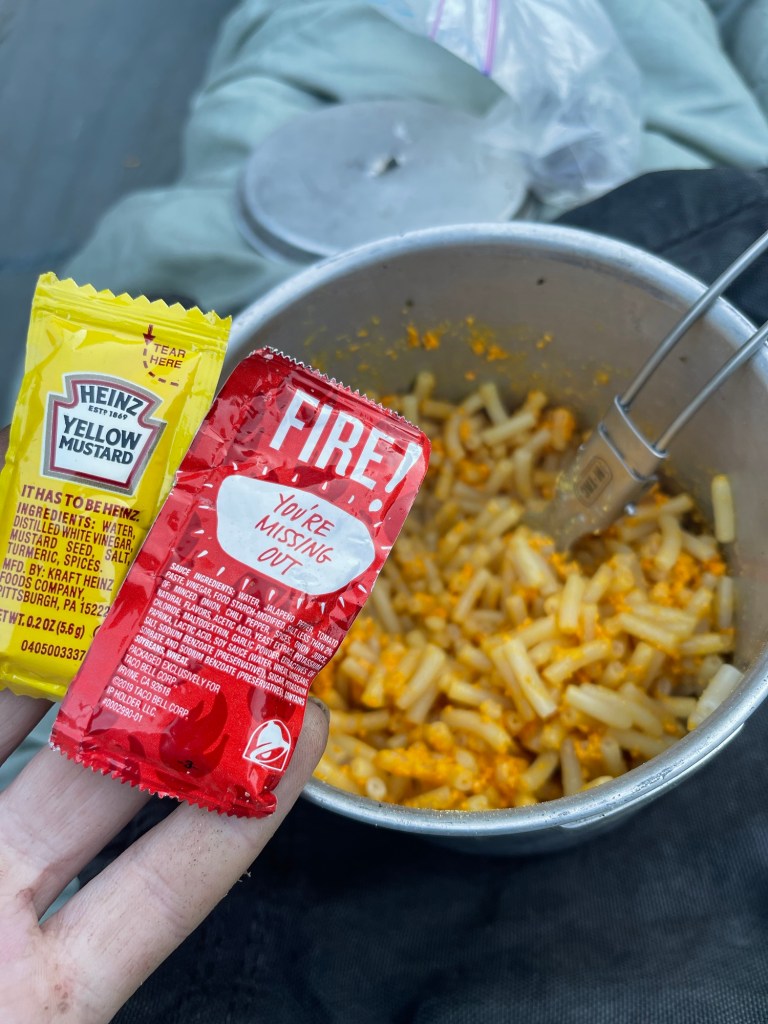
Boxed Mac and cheese was another staple of mine. I could often find a box in a hiker box and at resupply stops. Two of my favorites were Kraft and Annie’s. I felt that Annie’s had a better cheesy flavor but was often a pinch more expensive than Kraft. Again this is another easy one-pot meal. I often added hot sauce or mustard to mine (just because I love mac and cheese with mustard). Boxed mac and cheese can also be pretty light if you toss the cardboard and keep the ingredients in a ziploc bag.
5. Backpackers Pantry Chana Masala
When I was thru-hiking I rarely packed out a dehydrated meal. This was simply because they can be quite expensive, take a little bit longer to make, and sometimes don’t pack out great. I was gifted some dehydrated meals before and during the trail from my aunts and some friends which was a luxury. My favorite is the Chana Masala Backpackers Pantry meal. It has great flavor and was a nice break from the monotony of my other trail food. It was a bit more nutritious too. I often ate these meals the night after town so I could use the bag as my garbage bag. It can be tough to fold this bag up to store in a ziploc simply because they are a bit bulky. I think Chana Masala ranges around $10 off trail but can jump to $15-$20 when you are in a resupply location. Dehydrated meals are nice when you are doing a two-day trip because they are super convenient and yummy. When you are hiking for much longer times though it can be expensive.
Lunchtime bites & snacks
6. Tortilla with filling
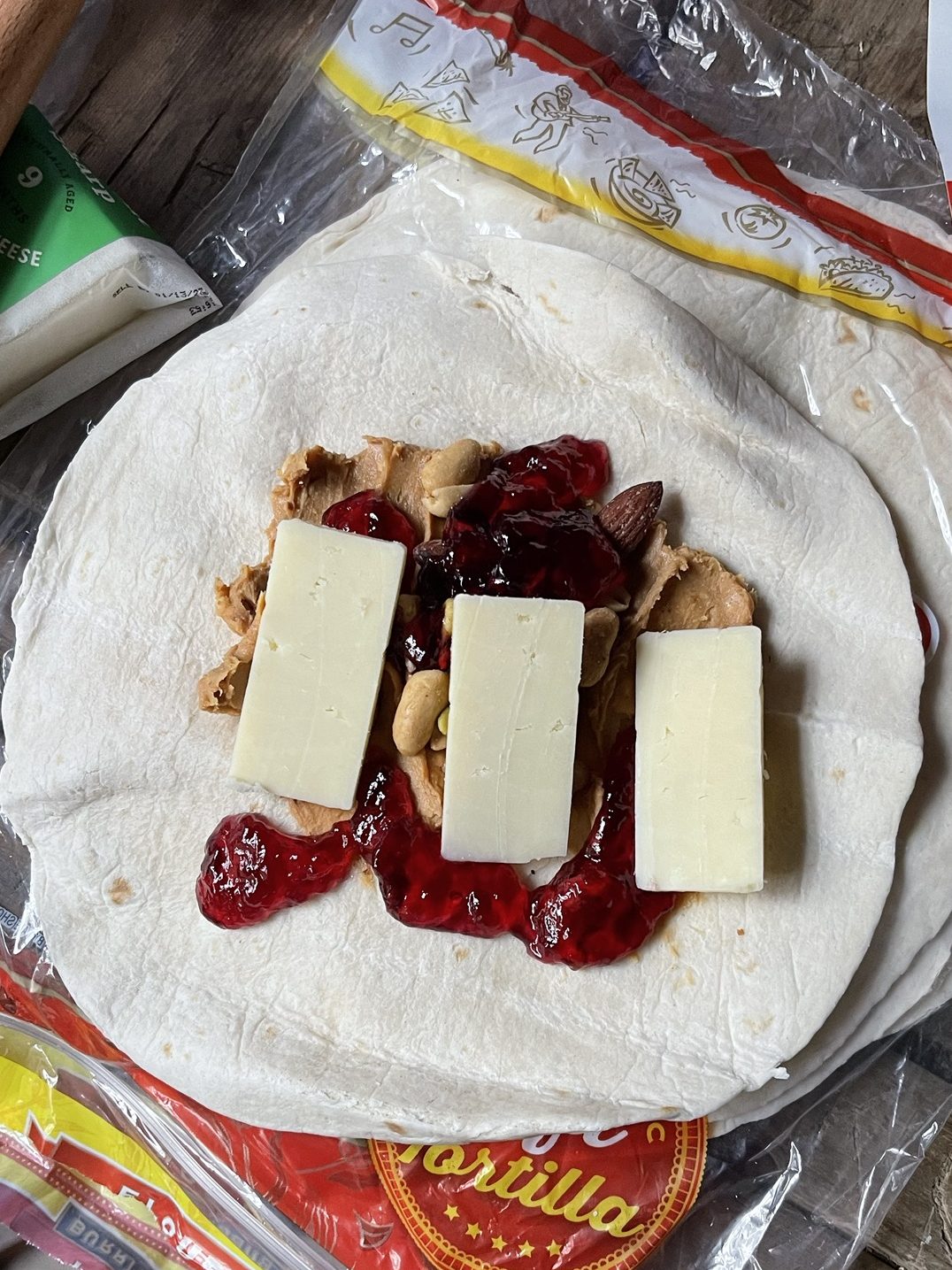
Tortillas are amazing for backpacking. Unlike bread, you don’t have to worry about them getting smushed and they pack really nicely. They come in a range of flavors, sizes, ingredients, and colors! I normally opted for the Mission flour taco size tortillas. Tortillas were my go to for lunch. I often packed out some tuna packets which went great in a tortilla. A couple times I carried some jelly and peanut butter with me which was a real treat. I have made a wrap with dried chickpeas and chicken/tuna, PB&J with sharp cheddar cheese (amazing), flavored rice packet, PB & dried fruit, PB & honey, some crunched up chips, or a packet of refried beans. All of these are yummy options, and there are endless more. The nice thing with a tortilla is you can really play around with a recipe and still get some good nutrition. Some people pack out dried meat, fresh veggies, and nuts and seeds which all add great calories and nourishment. Tortillas are relatively low mess and quick so they make a great mid-day bite.
7. Pre-packaged tuna or chicken with veggies
Some tuna brands make packaged tuna “salads.” These salads have couscous/pasta/or rice with veggies with some dressing and tuna. These are great in a tortilla but are also fine just on their own. Starkist is a brand I ate quite a bunch of these “Smartbowls” from, and their packages hover around 180 calories. Even though I am pretty much always hungry on a thru hike, I don’t like to eat a bunch at lunch time because it tends to slow me down. So these Smartbowls are a pretty nice bite for lunch.
8. Peanut Butter

Per the P in my trail name (Smirky P) it is well known that I am a peanut butter fan. On my first attempt of the PCT I regularly cleaned out peanut butter jars, probably one a week. These were the peanut butters filled with a bunch of oils and sugar, but tasted so so good. Unfortunately resupply towns often did not have the more natural peanut butter. I’d eat a couple spoonfuls throughout the day. I kept the jar and spoon in an accessible location in my backpack so I could pull it out whenever I had a hankering. Peanut butter is calorically dense and is a great snack and addition to your meals on trail. Sometimes I alternated between a jar or individual squeeze packs of PB. The packs were nice because they helped me control my portions a bit better than the endless spoons. I discovered the Chobani flavored peanut butter packs at Sams Club and those were so yummy for deserts.
9. Maple Syrup
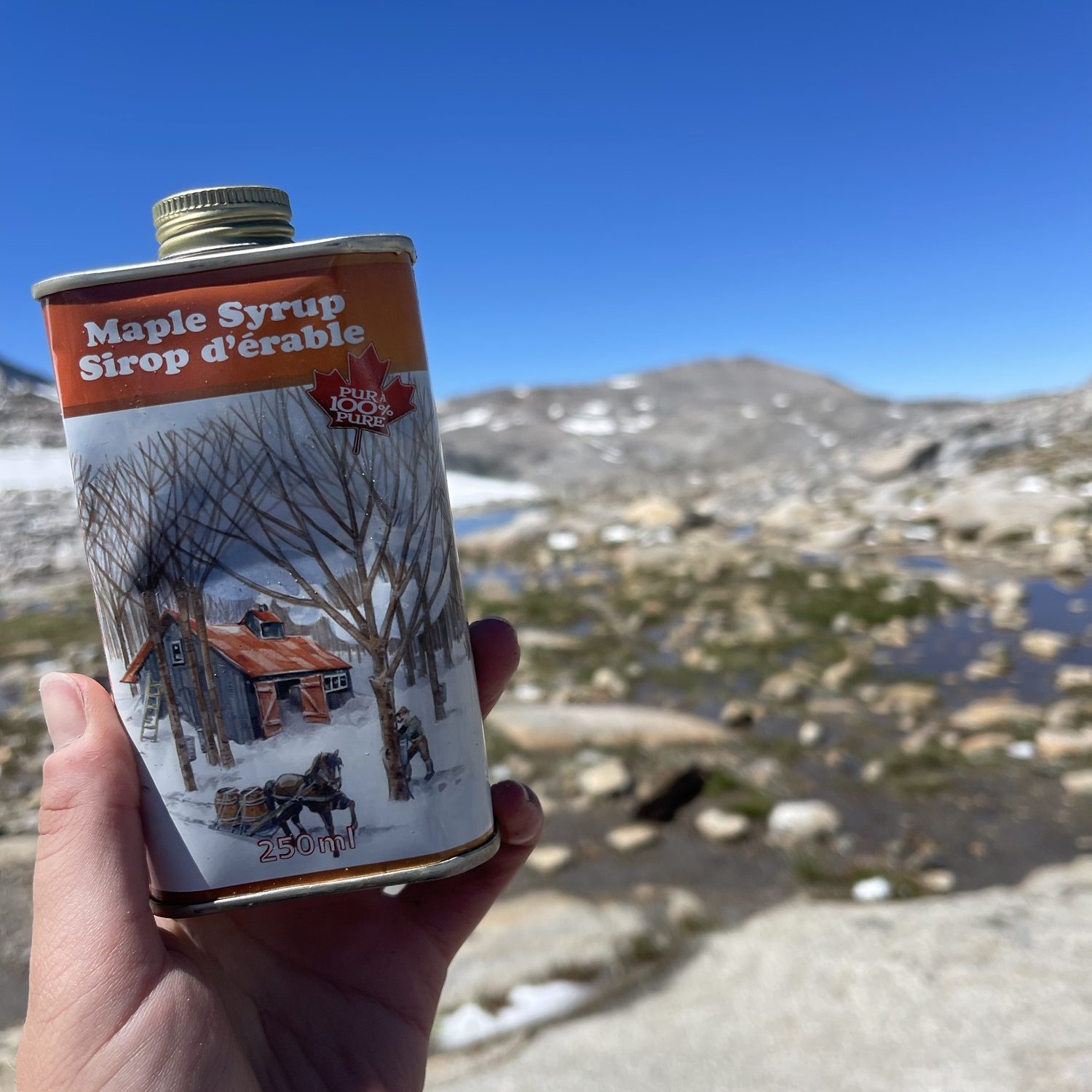
Twice on trail I had access to maple syrup. It isn’t a super convenient item to have on trail but it was such a treat and has become a bigger part of the discussion on fueling for endurance activities. This is for a couple reasons, maple syrup contains amino acids which helps repair muscles, it’s water soluble which means quick and easy digestion, low-glycemic index (no sugar crash), contains electrolytes and other vitamins/minerals, and contains a load of antioxidants. Untapped sells maple syrup in ~1 oz containers in a couple different flavors. I like their little pouches since they are super convenient. I have packed out a large container of maple syrup and just sipped on it for a couple of days. This isn’t for everyone especially if you are trying to stay lightweight in the food department. I just get sick of the same food over and over again and the syrup was a nice shift from peanut butter. But, like peanut butter, maple syrup does not last long around me. I add maple syrup in this post just to help people think a bit out of the box when it comes to on trail fueling.
10. Poptarts
Poptarts are an amazing snack and breakfast item for trail. My second time on the PCT I ate poptarts for breakfast. My favorites were the cookies and cream, s’mores, and birthday cake. Again, variety is big for me so I liked having the option to try different flavors. I found poptarts or something similar at most resupply stops. They can be pretty cheap. The only downside is that they get crushed easily and are quite high in sugar. Given that they are high in sugar, this is a food I save only for backpacking.
11. Granola Bars
When people think of backpacking or hiking food they almost always think of granola bars. Granola bars come in a variety of flavors and sizes and are super convenient. But they get old fast. Protein bars are nice if you want more calories but after eating two a day for two weeks you’d probably never want to eat another one for the rest of your life! When I was in more urban resupply stops I was able to check out other granola bar options outside of Clif and Quaker. Some of my favorites are Jambar, Kate’s Real Food Energy Bars, Bob’s Red Mill Granola Bars, Barbell, Bobos, and Kind. I liked having a variety of flavors and texture options when it came to bars. It gets boring eating the same chocolate-covered granola bar day in and day out. I found these brands to have some good ingredients and flavors. Anything outside of the typical Quaker Oats bar or the like will be a bit more money.
12. Chips
Chips are a great snack for on trail as long as you don’t mind them getting squished. I often packed out a bag of salt and vinegar chips or Taki’s. I craved a lot of salty foods and these seemed to quench that craving. Squished chips are a nice topping on rice, mac and cheese, or on a tortilla. Or you could just dump the squished remains directly in your mouth. Expect that chips will not last long in your pack (similar to PB and maple syrup for me).
13. Flavored drink mixes & tea
You drink a lot of water hiking. I didn’t do such a great job at this when I first started out. There was one time where I could have been severely dehydrated just because I wasn’t paying attention. If you are like me it’s nice to have a little something extra to make yourself drink more. I added some electrolytes from Gatorade, Hum, and Mio to my water throughout the trail. In days where the temps were 90 degrees Fahrenheit and above I brought along tea bags. Water typically sits on the outside of your backpack and will heat up quickly. So I made a “walking suntea.” I’d just pop a tea bag in my bottle and let the flavor steep throughout the day. If you have some lemon juice packets, that can add a nice touch too. Some nights I had hot cocoa mix for dessert. Oftentimes I didn’t want to fuss with heating water to make a real “hot” cocoa so I would just throw the mix in with some cold water and shake it up. Drink mixes are typically pretty small, but can break up the monotony of the same flavors of food each day. They are especially nice to add when you are drinking water from some less than desirable places that don’t taste the greatest.
14. Fresh fruit and veggies
When I first started hiking I never thought to pick up fresh produce to hike with until I saw other people doing it. In the middle of Washington I started looking for apples or carrots to pack out. You can become malnourished while hiking if you are sticking to the stereotypical ramen and poptarts. And this would seriously impact your hiking ability. Although produce might weight a bit more it is something to consider making a sacrifice for. One of my favorites to pack out were kiwis. You can eat the entire fruit and don’t have to worry about packing out the peel or rind. Another thing to note, just because you are eating produce does not mean it is okay to leave it to “compost” in the environment you are walking through. Unless you picked the fruit/veggie in the woods, do not leave it there to go back to nature. Other produce that is nice to pack out are celery and carrots because they go well with PB and most quick meals.
15. Town food
When I was planning my thru hike and meal prep I never considered that town food would be an option. There were a couple times I packed out baked goods for breakfast, pizza for dinner, or burritos for lunch. I think it can be easy to overlook the great food resources available at resupply town restaurants.
Other things to consider
- Consider the temperatures of where you will be camping/eating:
Is it going to be cold outside? Are you going to want to sit over a stove waiting for water to boil or food to cook? It might be easier in these scenarios to cold-soak or bring food that doesn’t need a lot of prep. Your body will cool down quite a bit when you stop hiking so if you are sitting waiting for things to cook you might get pretty cold.
- How long does the food take to make?
If you are someone who loves to cook it would make sense to carry that passion into backpacking. I like to cook, but on the trail I would rather not. I get tired and only have energy to boil some water or throw things in a tortilla. There can be great joy in packing out some veggies to cook or other food materials but just know they require more energy and clean-up, and might be better suited for simple overnights and not a thru-hike. With that being said, I have met a couple of people who did pack a couple cooking utensils and spices, so it is not unheard of!
- Have you eaten this food before?
I wish I listened to this advice early on. I thought it would be a great idea to dehydrate some veggies and throw it in a vacuum sealed bag with some one minute rice. I made about ten of these packages, and ate a quarter of one. I never tried it before the trail and when I tried it in my first week I realized what a big mistake I had made. They were awful. My advice is to pack what tastes good and feels good for you. Do not think to yourself “you know what, I’ve never eaten sardines before that might be a good food for me, let me buy a bulk container and send them to myself for the next three months.” Pack what you already eat now.
- What is the cost and weight of the food item?
Those packages of pre-cooked rice or veggies in sauce are really yummy but can be heavy if you are packing for a couple of days. There are lighter more convenient options out there. I mentioned before that dehydrated meals are nice, but they can get expensive quickly. I’d save both of these meal ideas for shorter trips or celebratory days on trail.
- How can you add some more nutrition to the meal?
Think about what produce you can purchase, or nuts and seeds you can add to a meal. Enriching your meals with some simple ingredients make a big difference.
- How much waste does this food item make?
Are you packing out a large box or hard plastic item? You have to consider carrying that food item for the entire journey between trails. Maybe consider how you can consolidate like pouring something into a plastic bag. Also think about any steps needed to make the food, do you need more than one pot? Consider too, if you have gray water how will you dispose of it? If I had too much water in my pasta leftover I just drank it to sap up any more calories/nutrients available. It is not okay to just dump this water on the ground as it is still considered a form of food.
- What can you bring to enhance meals and flavors?
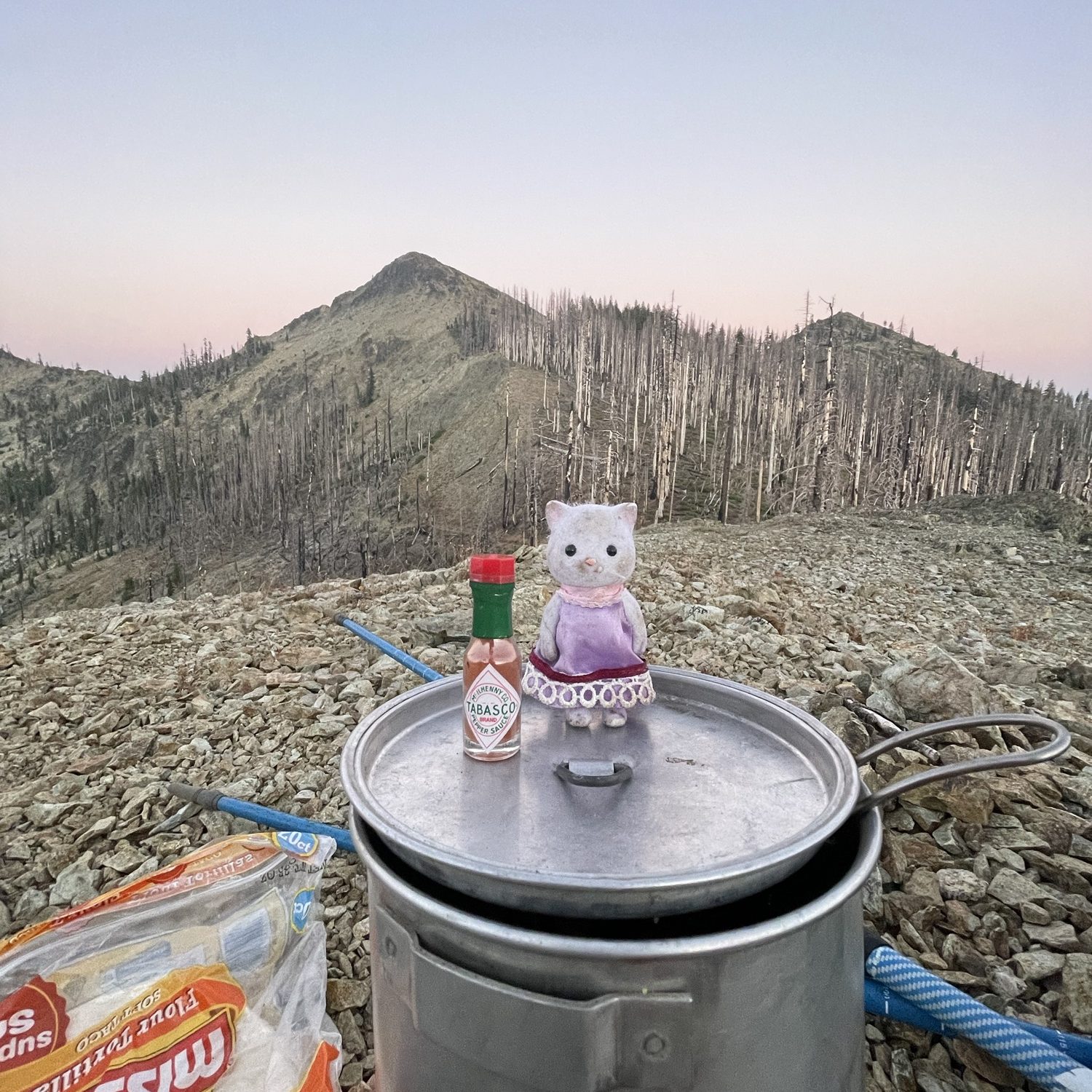
I know I mentioned that it might be unwise to bring an array of spices, but I do think some things might be helpful. Before I started the PCT my mom took up a sauce drive at work. She collected people’s unused ketchup, hot sauce, mustard, and soy sauce packets. I still have a gallon ziploc full of ketchup packets I still bring with me on overnights and camping trips. If you tire of the same food quickly I’d urge you to think of incorporating some different sauces. Similar to drink mixes, sauces are small but can make a big difference. Another plus is that if you packed food for yourself you never tried before and don’t love it, you could potentially add some sauce and at least finish the meal.
- Coffee, ramen, and oatmeal
Similar to granola bars, most people associate backpacking food with ramen and trail mix. I ate ramen almost every night for three weeks on my first crack at the PCT and definitely got my fill of it. It is nice and salty and the flavor isn’t awful but it just got sad to eat. Imagine this, you are walking all day your hunger is growing by the hour, your hiking buddies start to talk about what they are craving and what they packed for dinner, they ask what you are going to have, and you say ramen for the 16th night in a row. It’s cheap, lightweight, easy to make, but gosh does it get boring. I’d save ramen for when you are in a resupply spot that has nothing else but ramen. Pretty much every resupply will carry it. I do always carry an emergency ramen with me when I am backpacking.
I love coffee just as much as the next person. I love a nice freshly brewed cup of black coffee from my french press or an espresso. I thought I would love coffee on the trail too. So I bought bulk containers of instant coffee to bring with me for the duration of the hike. For the first week of my hike I woke up and boiled water for coffee. I drank it from my little cup and tried to get ready for the day. I soon grew tired of the hassle of setting up my stove to boil water. I then started to put the instant coffee in my water bottle and make a sort of DIY trail iced coffee. It didn’t taste good, no instant coffee ever does in my opinion. So I stopped drinking it all together, and I found that it made no difference on my energy levels. I know there are loads of people out there who have perfected their trail coffee and have all the nice gadgets for it. That is great and I am sincerely jealous of their commitment to good backcountry coffee, but unfortunately that is not me. So this again is a word of caution when it comes to food choices. If you are anything like me, and you want to hit snooze on your alarm before getting up, or want to collapse into your sleeping bag as soon as you get to camp, trail coffee might not be in the cards for you either.
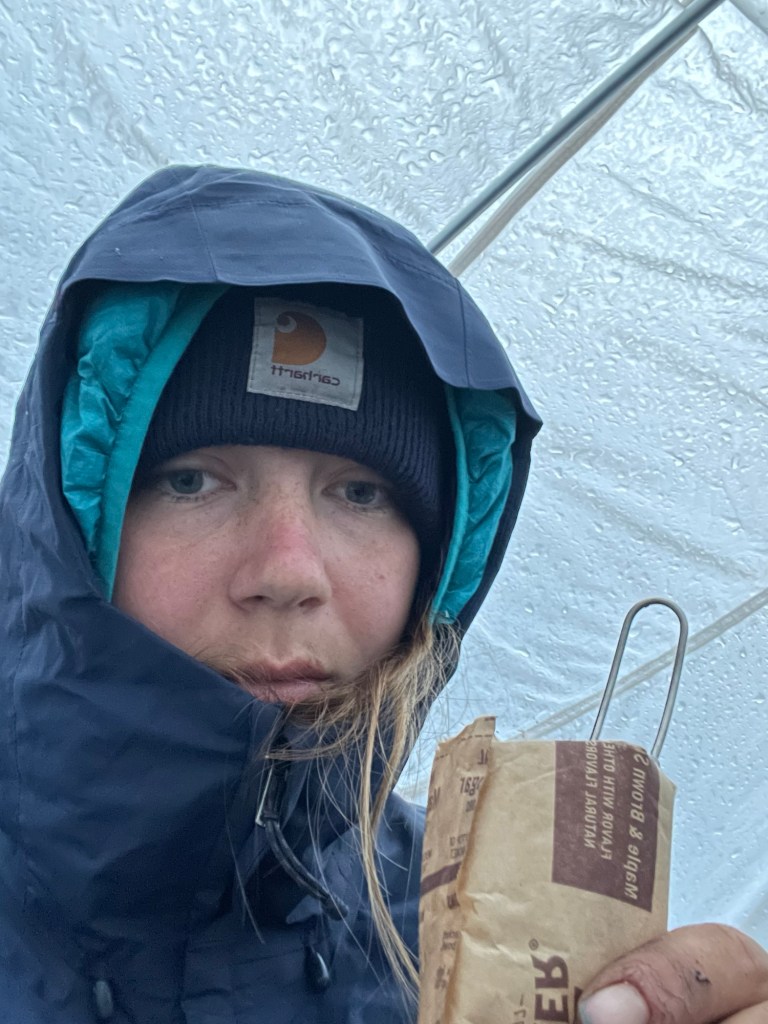
Oatmeal. I use to love oatmeal. When I started the trail I thought one packet of oatmeal eachday would be a good breakfast. I was so wrong. I eventually bumped it up to 2-4 packets a day. I ate the instant flavored oatmeal. Like the coffee, I warmed water up for my oatmeal for the first week. Then I switched to just eating cold oatmeal straight from the pouch. In places where resupply is limited I would get some instant oatmeal, but only if there were no other options. On trail you can really eat whatever you want and breakfast is one of those meal times I’d encourage people to be creative. Breakfast can be cheese or dried meat, nuts/seeds, protein bars, or a tortilla even. Oatmeal doesn’t have to be the only breakfast food.
I hope this insight helps you think about backpacking food a bit differently and consider how you can make food choices that will suit your needs. Everyone’s taste and style is different, I won’t judge you for eating ramen at 6 am as long as you don’t judge my mustard and hot sauce mac and cheese!
 Hannah the hiker
Leave a comment